


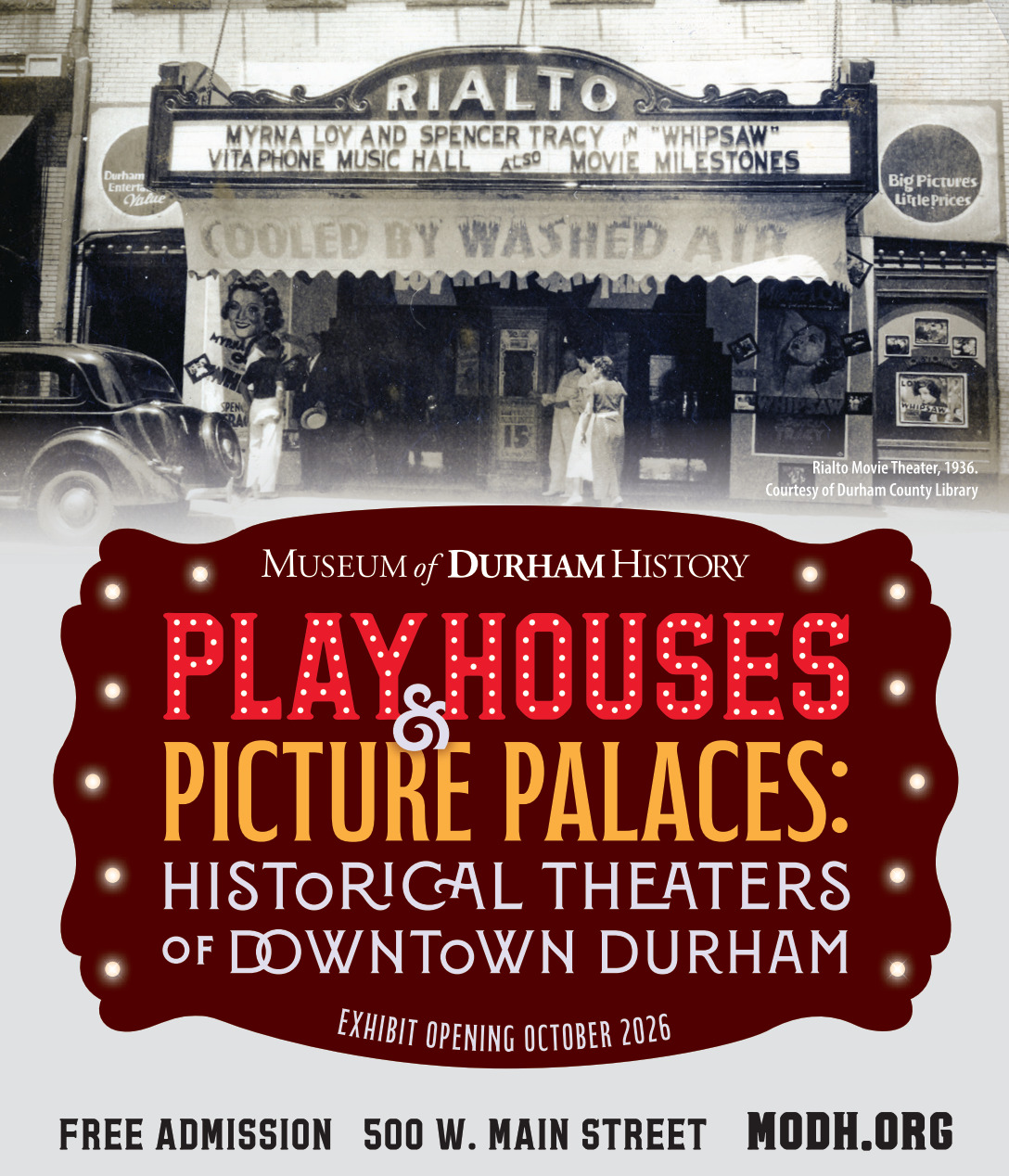
Playhouses and Picture Palaces: Historical Theaters of Downtown Durham
Playhouses and Picture Palaces now on display through Spring 2027
Visit the Museum of Durham History to discover the stories behind the city’s entertainment venues, from airdomes and other distinctive spaces to grand theaters. Spanning 20 sites and 31 named establishments from the 1880s through the 1970s, the exhibit traces the evolution of Durham’s vibrant entertainment scene. Explore the history and enduring legacy of the Carolina Theatre, the only surviving venue from this era, as it celebrates its centennial this year. Visitors can also see unique artifacts from the Theatre.
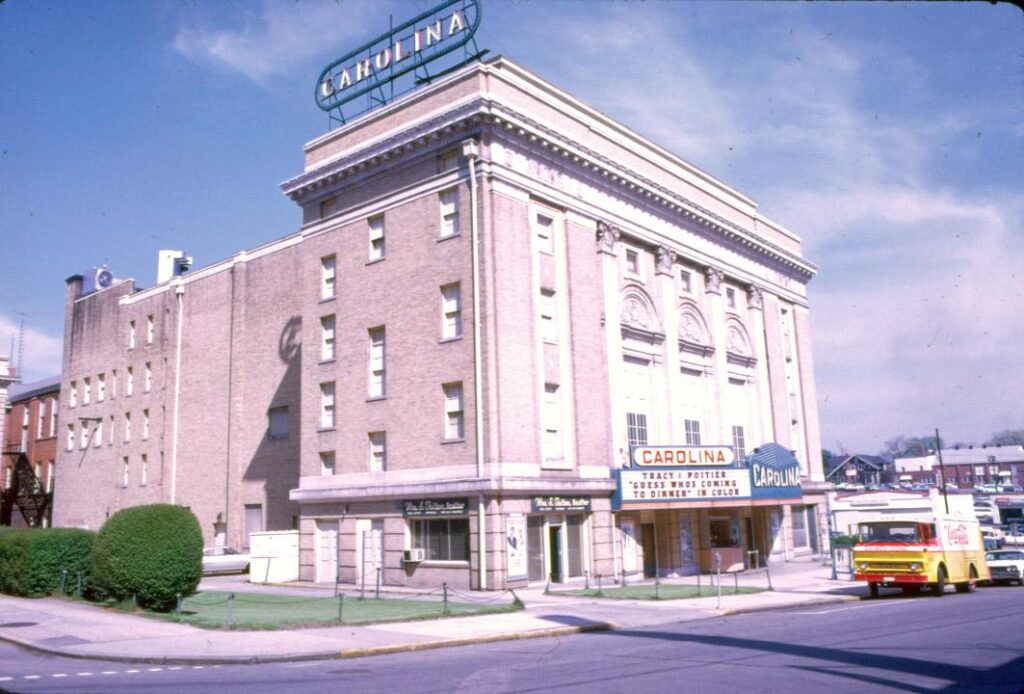
Carolina Theatre in 1967 courtesy of Durham County Library
People flocked to Durham in the late 1800s as the city emerged as a railroad hub and an important center of industry and commerce. Its downtown transformed into a bustling, energetic place as the population boomed. A streetscape of brick and stone buildings housed a lively mix of shops and businesses. Among these venues was Stokes Hall, a performance space of the kind often found on the upper floors of commercial or municipal buildings in cities of the era.
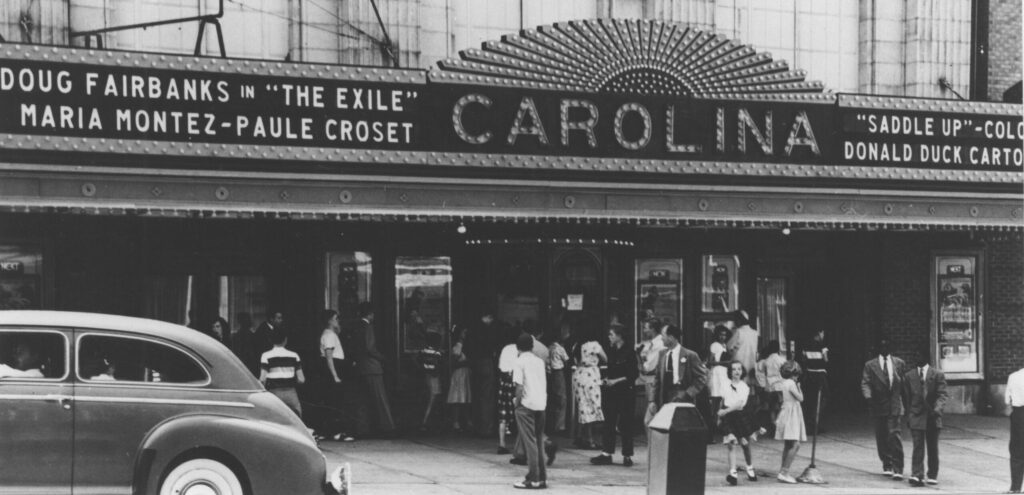
Carolina Theatre Marquee circa 1940 courtesy of Durham County Library
Soon, dedicated performance spaces began to appear, hosting an array of speakers, musical acts, vaudeville, minstrel shows, and other traveling entertainments. Before long, these venues began projecting moving pictures onto screens, and cinema became a central feature of public entertainment. As films evolved from silent pictures to talking pictures and increasingly elaborate productions, theaters evolved as well. Some grew into grand, ornate venues known as picture palaces.
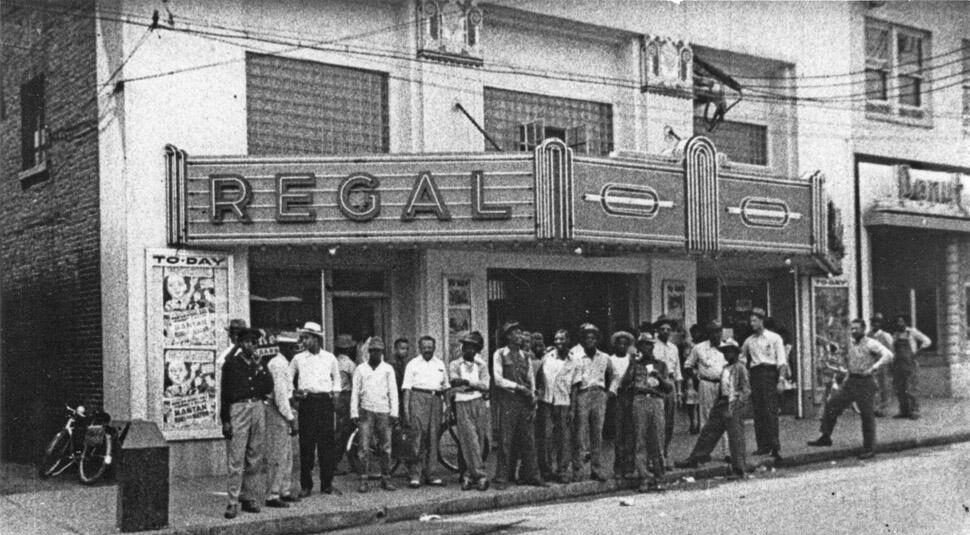
Regal Theater on Pettigrew St. in Hayti, circa 1940 courtesy of Durham County Library
Across the American South, theaters were largely segregated during the Jim Crow era, reflecting the racial inequalities that shaped everyday life. Black audiences often faced restrictions on where they could attend performances and where they could sit, while Black performers navigated a segregated entertainment industry.
In Durham, the thriving Hayti community became an important center of Black business, culture, and civic life. Its theaters and entertainment venues offered spaces where Black audiences could gather, enjoy live performances and films, and experience the work of Black artists. These venues helped showcase Black talent at a time when segregation limited access to many public spaces.
Explore the theaters that were an essential part of Durham’s entertainment history.
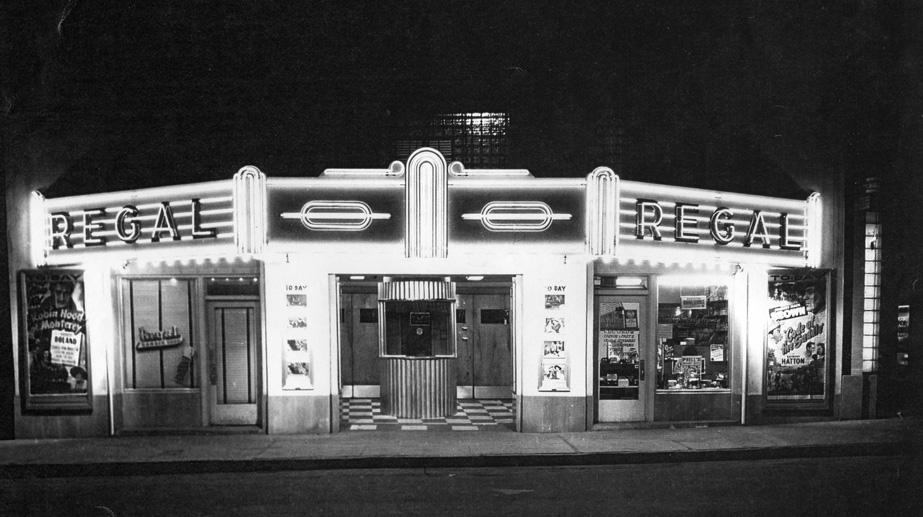
Regal Theater at night 1947 courtesy of Open Durham
Click HERE to visit our Events page for upcoming programs related to the exhibit!
The Museum of Durham History extends its gratitude to the individuals and corporate sponsors whose support made Playhouses and Picture Palaces possible, including:
|
Producer’s Circle
|

Center Stage |
Impresario
Duke Arts |
|
Silver Screen Marjorie & Claude Burton CT Wilson Construction Co., Inc. Duke Department of Theater Studies First Citizens Bank Mary Duke Biddle Foundation |
Spotlight Jane & Chris Brasier Durham Performing Arts Center (DPAC) Ruth Jane Roycroft 208 Rigsbee Partners, LLC
|
| Marquee
Bob Chapman & Vicky Patton Deborah Jakubs & Jim Roberts
|
Showtime
Barbara Anderson Sue Andresen & Brand Fortner Stephen Blank Daphne & Clay Harrison Jim Haverkamp Kris & Kristy Miller Beth Ray-Schroeder Susan Ross & Tom Hazdor
|
Vaudeville
Faby Balcazar Suarez Treat Harvey Benjamin Reese Meg & Jose Solera
|
Footlights
Into the Qi, Co. Daniel Ellison Robert Kanouse Anthony Reevy
|