


Visit - Current Exhibits
*Explore our digitized past exhibits HERE.
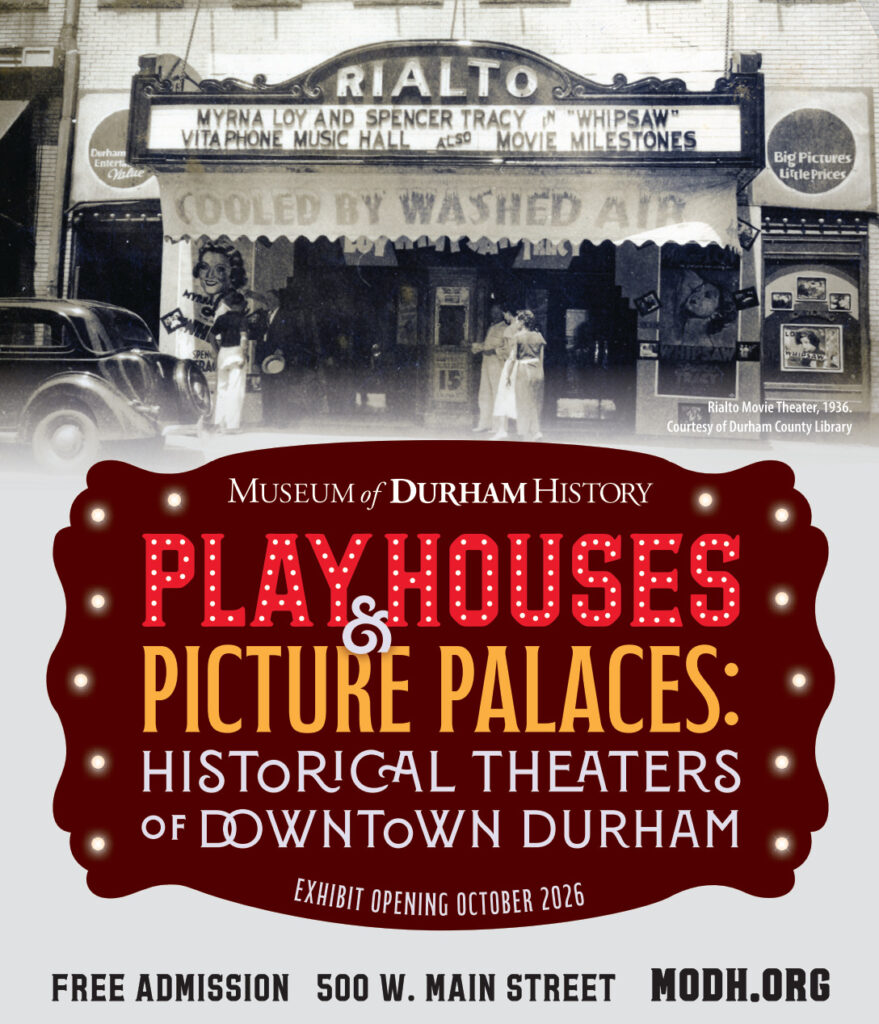
For nearly a century, the sounds of performances, laughter, music, movie audiences, and bustling crowds filled downtown Durham’s theaters. This October, the Museum of Durham History will bring some of those stories back to life with the opening of its newest exhibit, Playhouses and Picture Palaces: The Historical Theaters of Downtown Durham.
From the 1880s through the 1970s, downtown Durham was home to as many as 20 theater sites and over 30 named establishments, hosting everything from speeches and concerts to vaudeville, dramatic productions, minstrel shows, and, eventually, motion pictures. Playhouses and Picture Palaces explores this rich history through photographs, maps, artifacts, and stories of the venues that once animated downtown.
The Carolina Theatre takes center stage in the exhibit as Durham celebrates the theater’s centennial in 2026. The historic venue is downtown Durham’s sole remaining historic theater, and the exhibit will feature rare artifacts on loan from the Carolina Theatre, offering visitors a glimpse behind the scenes of one of Durham’s most beloved cultural landmarks.
The exhibit traces the evolution of Durham’s entertainment venues from its earliest opera houses and playhouses to the elaborate “picture palaces” that emerged during the golden age of cinema. It also examines the experiences of Black Durham residents, including the important role theaters in the thriving Hayti community played in providing spaces for Black audiences and performers during the Jim Crow era of segregation.
The exhibit follows the rise of moviegoing and the eventual decline of downtown theaters as suburbanization, urban renewal, automobiles, and television transformed American entertainment and the urban landscape.
Playhouses and Picture Palaces is supported by lead sponsor The Barnes Family Foundation as well as The Forest at Duke, Duke Arts, CT Wilson Construction Co., The Mary Duke Biddle Foundation, Duke Department of Theater Studies, First Citizens Bank, and other generous individual donors.
Durham Beginnings | 1865-1885
Dates: Ongoing
An exhibit featuring five dramatic but little-known personal stories evoking the spirit of Durham’s formative years. Learn the “coming to Durham” stories of Eliza Bennet Duke, Richard Fitzgerald, Abner Jordan, John Green, and Margaret Faucette.

Five generations of Faucette women, circa 1920 (North Carolina, Durham County Library)
Explore Durham Through Time
Dates: Ongoing
Visitors can use a touchscreen to explore key moments in Durham’s past. A post-it note wall allows viewers to tell us what moments from Durham’s past are most important to them. They may see their feedback incorporated later with a photo and caption.

Look Beyond the Windows
Dates: Ongoing
Take in the museum’s almost-360-degree view of downtown and consider the changes over time. To begin, we’ll focus on the Hill Building, Arts Council (formerly City Hall and Central High School), Liggett and Myers buildings, and NC Mutual tower.

Story Room
Dates: Ongoing
Visitors can step into the Story Room to record a personal memory about Durham’s past in. They can also explore memories others have shared or browse through old, local yearbooks. Stories recorded in the Story Room will be archived on the Museum’s SoundCloud or YouTube channel.

Memories of Durham Story Quilt
Dates: Ongoing
Each element on this quilt features different stories from throughout Durham’s history. The quilt was originally inspired by the countless oral histories collected by the Museum of Durham History, featuring people with first-hand experience of these events. CLICK HERE to visit the interactive digital quilt and learn about different memories of Durham’s residents.
The original quilt was completed in January of 2017. The Memories of Durham Story Quilt celebrates Durham’s shared heritage, depicted in cloth. The quilt is based on oral histories recorded for the Museum of Durham History Story Room Project. People from diverse backgrounds recalled their memories of Durham during the 19402 to the 1980s, and a selection of these stories formed the basis for the quilt’s design.
The quilters expressed their artistic interpretation of these memories by using pictures, texts, and fabrics to stitch together pieces, objects and vignettes that capture a collective remembrance deeply rooted in struggle, pride, and community.
