


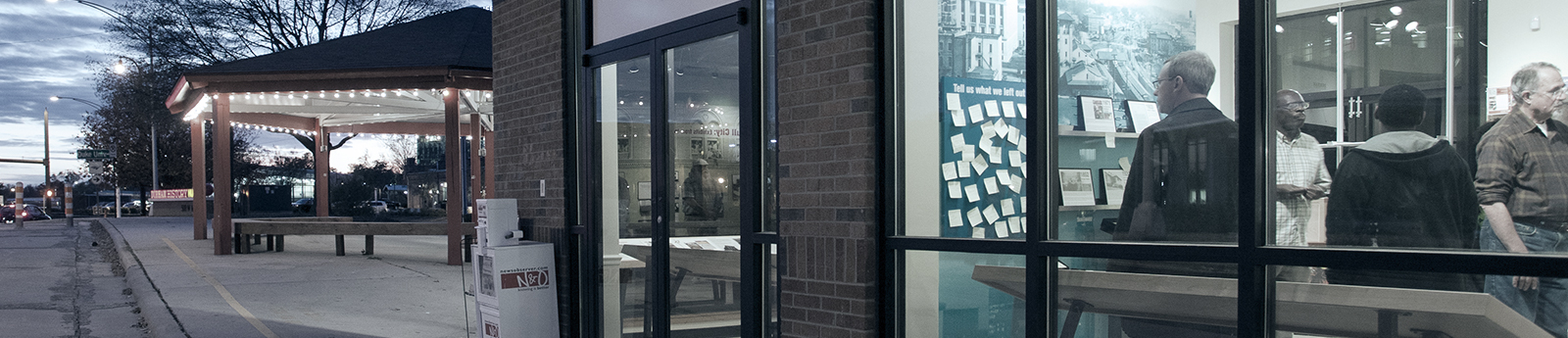

A Night of History, Pride, and Community – the opening event for To Love and Live Free!
Posted on May 29, 2026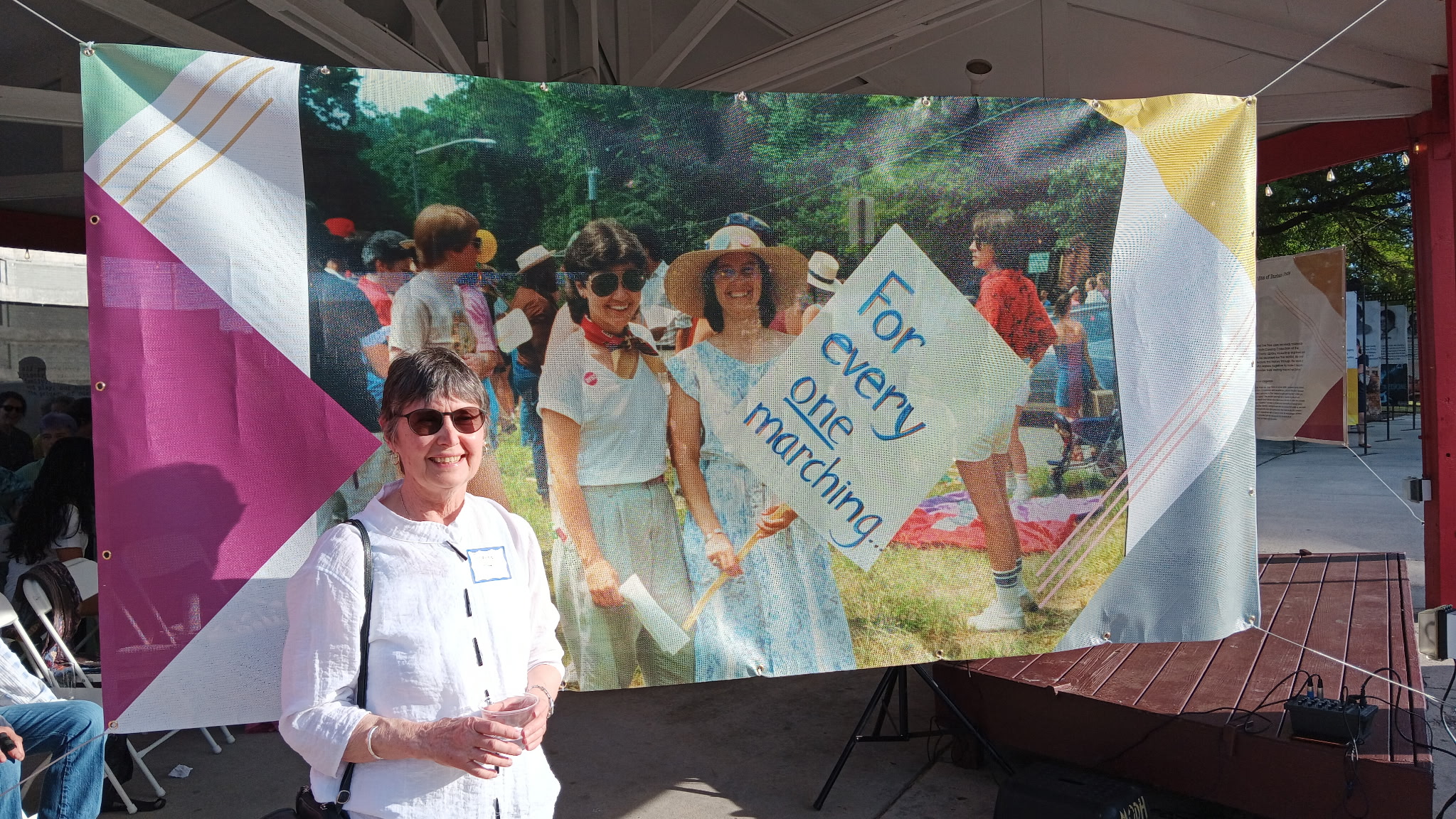

On Friday, May 15, the Museum of Durham History opened our most recent exhibit To Love and Live Free: The 1986 Mayoral Recall and the Origins of Durham Pride. With nearly 200 people in attendance, it was one of the Museum’s largest opening events to date!
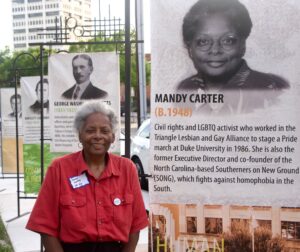
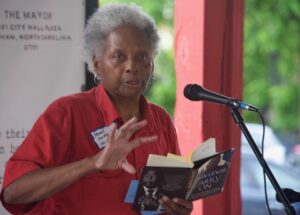
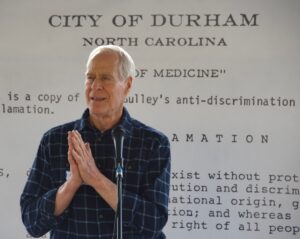
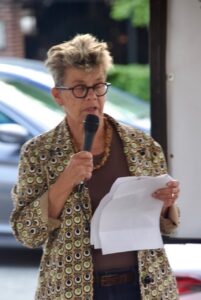
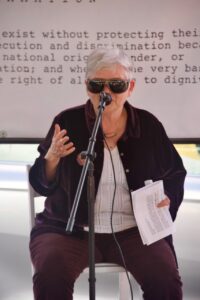
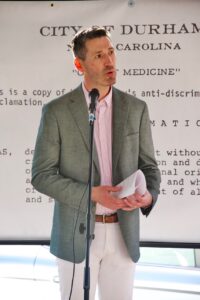
The program featured remarks from former Durham Mayor Wib Gulley, activist and scholar Mab Segrest, Pride organizer Meredith Emmett, activist Mandy Carter, and exhibit curator Andrew Nurkin. Each speaker offered personal reflections and historical insight into the recall fight that followed Mayor Gulley’s 1986 anti-discrimination proclamation and the broad coalition that emerged in response.


Guests filled the Museum galleries and plaza space as friends, neighbors, activists, and historians came together to reflect on the events of 1986 and the lasting impact they continue to have on Durham today. The atmosphere was warm and celebratory, with food from E.O.’s Athletic Club and drinks from Ponysaurus Brewing and Honeygirl Meadery helping set the tone for an evening centered on community connection.
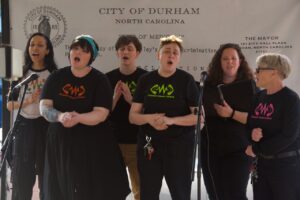
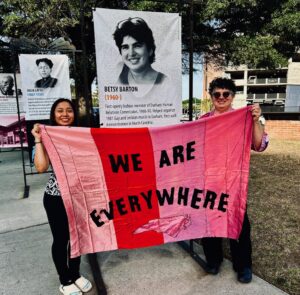
One of the evening’s highlights was a moving performance by members of The Common Woman Chorus. The chorus performed three songs that brought both joy and emotion to the crowd, underscoring the themes of resilience, solidarity, and hope that run throughout the exhibition. Their music transformed the opening into more than a historical program — it became a celebration of community and collective memory.
Despite the crowd, visitors had the opportunity to experience the exhibition itself, which features archival photographs, artifacts, documents, and 18 newly recorded oral histories from people who lived through the events of 1986. Conversations continued throughout the evening as attendees shared memories, reactions, and reflections inspired by the exhibit.
The Museum is grateful to everyone who joined us for this special opening night and helped make it such a memorable event.
To Love and Live Free remains on view until mid-October 2026.